Vacuum pumps are essential to a wide range of industrial applications, helping create controlled environments, move materials, or power mechanical systems. Among the various types of vacuum pumps available, the rotary vane vacuum pump stands out for its reliability, efficiency, and versatility. Whether you’re in food packaging, medical manufacturing, or electronics, understanding how rotary vane pumps work can help you choose the right system and operate it more effectively.
At Cullum & Brown, we provide both expertise and equipment, including a full line of dry-running rotary vane vacuum pumps, to help our customers meet their specific vacuum needs.
What Is a Rotary Vane Vacuum Pump?
A rotary vane vacuum pump is a type of positive displacement pump, meaning it moves air or gas by trapping it in a chamber and then compressing and exhausting it. These pumps are known for their ability to deliver consistent vacuum levels in a wide range of applications, including everything from printing presses to automated packaging lines.
Rotary vane pumps are often used because of their compact size, quiet operation, and steady vacuum output. They are especially popular in systems where simple, reliable operation is essential.
How a Rotary Vane Vacuum Pump Works
At the heart of the pump is a rotor that turns inside a cylindrical housing. This rotor is mounted off-center, creating crescent-shaped cavities. The rotor contains several vanes, typically made of carbon or composite materials, that slide in and out of slots by centrifugal force.
As the rotor turns, these vanes maintain contact with the pump chamber wall, forming sealed compartments. Air enters through an intake port, fills these compartments, and is compressed as the space reduces during rotation. Finally, the air is expelled through an exhaust port, completing the cycle.
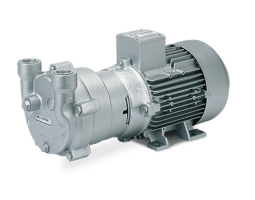
There are two main types of rotary vane pumps: lubricated and dry-running. Lubricated pumps use oil to seal and cool the vanes and internal parts. Dry-running pumps, like the ones offered by Cullum & Brown, operate without oil in the compression chamber, making them ideal for applications that require a clean, oil-free vacuum.
Advantages of Rotary Vane Vacuum Pumps
Rotary vane pumps offer several advantages that make them a reliable choice across industries:
- Compact and easy to integrate into systems
- Smooth and steady vacuum delivery
- Low operating and maintenance costs
- Durable components for long-term performance
- Quiet operation with minimal vibration
These qualities make rotary vane pumps a preferred choice for both standalone and integrated system designs.
Dry vs. Lubricated Rotary Vane Pumps
Dry-running and oil-lubricated rotary vane pumps each have their strengths depending on the application.
Dry-running rotary vane pumps are ideal for clean environments or where oil contamination must be avoided, such as in food packaging, medical equipment, or electronics manufacturing. They offer simplified maintenance and are environmentally friendlier due to the absence of oil.
Oil-lubricated pumps are typically used when higher vacuum levels are needed or when the application demands continuous, heavy-duty operation. The oil provides better sealing and thermal management, but adds complexity in terms of maintenance and disposal.
Cullum & Brown supplies dry vane vacuum pumps designed for reliability, easy serviceability, and long service life. These systems provide dependable performance without the hassle of oil management.
Common Applications
Rotary vane vacuum pumps are used across a wide variety of industries, including:
- Food packaging (e.g., vacuum sealing and forming)
- Medical and laboratory systems (e.g., suction and sterilization)
- Printing and paper handling
- Plastics molding and material conveying
- Electronics and semiconductor manufacturing
Because of their consistent vacuum output and compact design, they’re often used in automated systems and tight spaces where reliability is key.
Maintenance Tips and Best Practices
Proper maintenance ensures your rotary vane vacuum pump performs efficiently over time. Here are some best practices to keep in mind:
- Inspect and replace vanes as they wear to maintain sealing performance
- Clean or replace inlet filters regularly to prevent contamination
- Monitor pump temperature and sound for early signs of failure
- Keep the operating environment clean and well-ventilated
- Follow the manufacturer’s schedule for inspections and component replacement
Cullum & Brown offers preventative maintenance services and replacement parts to keep your vacuum systems running smoothly and minimize unplanned downtime.
Choosing the Right Rotary Vane Pump
Selecting the right pump depends on several factors, including your desired vacuum level, flow rate, duty cycle, and the cleanliness of your environment. Choosing between a dry-running and lubricated model also depends on whether oil contamination is acceptable in your process.
Cullum & Brown’s team of vacuum system experts can help evaluate your operation and match you with the best-fit solution. Whether you need a new system, a replacement pump, or service for your existing equipment, we’re here to help you improve reliability and efficiency.
Contact us today to learn more about our rotary vane vacuum pumps.