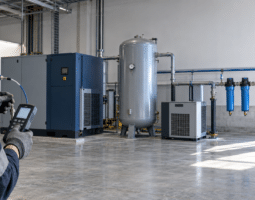
An on-site nitrogen generator makes nitrogen from the compressed air a plant already produces, at purities from 95% to 99.999%, and replaces cylinder and bulk deliveries. It works by one of two methods: pressure swing adsorption (PSA) or membrane separation. PSA covers the full purity range and uses less compressed air at high purity, while membrane units are simpler but practical only up to about 99.5%.
Delivered nitrogen costs more than the gas: cylinder rental, delivery, changeover labor, and, according to Gardner Denver’s XGN2 nitrogen generator brochure (2022), the 10–20% of bulk nitrogen lost to bleed-off or left in canisters. On-site generation shifts that expense to compressed air, so purity, feed air quality, and compressor capacity decide whether it pays off.
What Is a Nitrogen Generator?
A nitrogen generator is equipment that produces nitrogen gas on site by removing oxygen from compressed air. It delivers nitrogen at a set purity, typically 95% to 99.999%, using either pressure swing adsorption (PSA) or membrane separation, and replaces nitrogen delivered in cylinders or bulk tanks.
Plants use that nitrogen wherever oxygen causes combustion risk, corrosion, or spoilage: flushing food packages before sealing, blanketing tanks and purging lines in chemical and pharmaceutical processing, protecting solder joints in electronics, and shielding metal during heat treating and laser cutting.
Because air is already about 78% nitrogen, the job is removing oxygen, and purity is checked by measuring the oxygen that remains: about 1,000 ppm at 99.9% nitrogen and 10 ppm at 99.999%. That residual oxygen is what the process actually responds to.
How PSA Nitrogen Generation Works
A PSA generator uses two towers filled with carbon molecular sieve (CMS), an adsorbent whose pores trap the slightly smaller oxygen molecules under pressure while nitrogen passes through. Because each tower eventually saturates, the two take turns:
- Production. Compressed air enters one tower, the CMS adsorbs oxygen, and nitrogen exits for use.
- Regeneration. The second tower vents to atmosphere, releasing its oxygen, while a small stream of product nitrogen sweeps it out.
- Pressure equalization. The towers connect briefly so stored pressure is shared rather than wasted.
- Tower switch. The regenerated tower takes over production, and the cycle repeats.
Purity is set by how long air stays in contact with the media: longer contact removes more oxygen but yields less nitrogen. A nitrogen receiver downstream usually smooths flow during tower switches.
The Gardner Denver XGN2 PSA generators that Cullum & Brown supplies are rated from 95% to 99.999% purity, with an onboard oxygen analyzer to confirm what the process receives. The tradeoff is mechanical complexity: switching valves, controls, and periodic exhaust noise.
How Membrane Nitrogen Generation Works
A membrane generator has no towers or cycle. Compressed air flows through thousands of hollow polymer fibers. Oxygen, water vapor, and carbon dioxide pass through the fiber walls quickly and vent away, while slower-moving nitrogen continues to the outlet as the product stream.
Purity is controlled by flow and pressure: slower air or a higher pressure difference lets more oxygen escape, raising purity and lowering output.
With no moving parts, membrane systems reach purity in seconds, run quietly, and deliver dry nitrogen. Their limit is purity. They are generally applied up to about 99.5%, and pushing higher takes disproportionately more compressed air.
PSA vs. Membrane: Which Fits Your Process
Start with the purity the process requires. That one requirement settles most decisions before anything else is compared.
| Factor | PSA | Membrane |
|---|---|---|
| Practical purity range | 95% to 99.999% | About 95% to 99.5% |
| Compressed air used per unit of nitrogen | Lower, especially at higher purities | Higher, and rises steeply as purity increases |
| Start-up to rated purity | Minutes | Seconds |
| Moving parts | Switching valves and controls | None in the separation module |
| Noise | Periodic exhaust during regeneration | Very low |
| Feed air sensitivity | Oil and moisture damage the CMS | Oil and liquid water damage the fibers |
| Typical fit | High-purity processes, larger continuous demand | Moderate purity, intermittent use, space or noise limits |
When the process needs better than 99.5%, PSA is the only practical option. Below that, a membrane unit can make sense for a small, intermittent, or noise-sensitive application where simplicity matters more than air use. For steady, plant-scale demand, PSA’s lower air consumption usually pays off over time.
That is why Cullum & Brown’s nitrogen generation line is built on Gardner Denver XGN2 PSA generators. One platform covers 95% to 99.999%, so a facility can raise purity later without changing technology, as long as the generator is sized for the lower output higher purity brings.
Higher Purity Means Less Nitrogen From the Same Generator
Specifying more purity than the process needs is the most common sizing mistake, because every step up cuts output. The published ratings for the Gardner Denver XGN2-118LS (70°F ambient, 110 psig inlet) show how sharp the drop is:
| Nitrogen purity | Rated nitrogen flow (cfm) |
|---|---|
| 95% | 94.7 |
| 99% | 52.9 |
| 99.9% | 38.5 |
| 99.999% | 14.5 |
The same machine delivers about 3.6 times more nitrogen at 99% than at 99.999%. Specifying 99.999% for a process that tolerates 1% oxygen means buying a bigger generator and feeding it more compressed air for purity nobody uses.
Before sizing, confirm the maximum residual oxygen the process tolerates with the process owner or equipment manufacturer. If only one application needs high purity, a smaller dedicated unit for it can cost less than running the whole plant at that purity. Size to real inlet pressure and room temperature too, since output drops below rated conditions.
The Generator Depends on the Air System Feeding It
A nitrogen generator inherits the problems in the air feeding it. Oil aerosol and vapor coat CMS pores and membrane fibers, and that lost capacity does not come back. Liquid water degrades CMS and clogs membrane fibers.
Manufacturers publish inlet requirements for oil, pressure dew point, and particulates, which usually means a dryer upstream plus coalescing and activated carbon filtration after an oil-lubricated compressor. Writing those requirements as an ISO 8573-1 class makes them easier to specify and verify. Our guide to understanding compressed air quality classes explains how, and Cullum & Brown’s air dryers and filters cover the treatment side.
A generator is also a new, steady air demand, and at high purities it can draw several times its nitrogen output in feed air. On a system already near its limit, that can pull down plant pressure and starve other equipment. A compressed air system analysis before installation shows whether existing compressors can carry the load.
What On-Site Nitrogen Costs Compared With Delivered Supply
A generator’s price scales with the flow and purity it delivers, so the useful comparison is total cost over time. Delivered nitrogen carries the gas price plus rental, delivery charges, handling labor, and lost product. On-site generation shifts that to equipment and installation, plus electricity for compressed air (usually the largest operating cost) and routine filter maintenance.
Compared with bottled nitrogen, Cullum & Brown typically sees a return on investment in 18 months or less. The actual figure depends on usage, purity, electricity rates, and the current supply contract. Twelve months of nitrogen invoices is enough to build a realistic comparison.
Keeping a Nitrogen Generator Reliable
Most nitrogen generator maintenance happens upstream: filters replaced on schedule, drains that keep working, and a dryer that holds its dew point through summer peaks. On the generator itself, watch the controller’s trends. Rising residual oxygen at the same flow, or falling output at the same purity, usually points to feed air problems or aging media before the process notices. Keep the oxygen analyzer calibrated, and fold the generator into the same preventative maintenance program as the compressors and dryers that feed it.
Start With the Purity and the Usage
Before comparing equipment, pin down the residual oxygen your process can tolerate and how much nitrogen each point of use consumes. Those two numbers settle the technology, the generator size, and the compressed air supply. If you’re weighing a move away from delivered nitrogen, Cullum & Brown can review your usage, purity requirements, and compressor capacity and match them to the right nitrogen generation system. Contact our team to start that review.